Meal Prep · South Indian
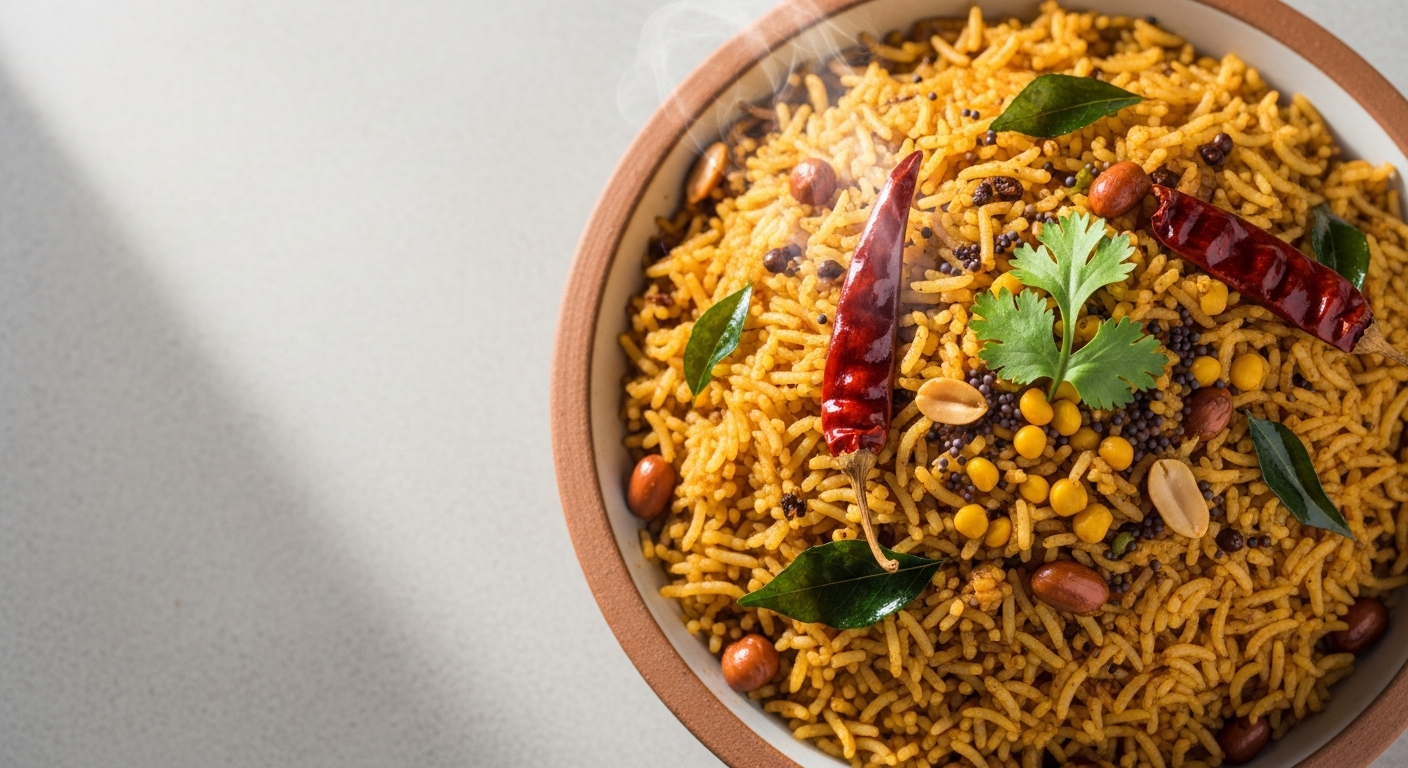
Tamarind Rice (Puliyodarai)
A tangy, spicy, and incredibly flavorful South Indian rice dish, perfect for festivals, lunchboxes, or a quick, satisfying meal.
Ingredients
Tap to check offMethod
Step-by-step- Prepare the tamarind pulp by soaking a lemon-sized ball of tamarind in 1/2 cup warm water for 15 minutes. Squeeze and extract thick pulp, discarding the fibrous residue.
- Heat sesame oil in a large pan or kadai over medium heat. Add mustard seeds and let them splutter.
- Add urad dal, chana dal, peanuts, and broken dried red chilies. Fry until the dals turn golden brown and peanuts are roasted.
- Stir in asafoetida and curry leaves, sauté for a few seconds until fragrant.
- Pour in the tamarind pulp along with turmeric powder and salt. Mix well and bring to a simmer.
- Cook the tamarind mixture on low heat, stirring occasionally, until it thickens and the oil separates from the sides (about 8-10 minutes). This is the ‘pulikachal’ or tamarind paste.
- Add the Puliyodarai Powder and the optional jaggery/sugar to the pulikachal. Mix thoroughly and cook for another 2-3 minutes.
- Remove the pan from heat. Add the cooked and cooled rice to the pulikachal. Gently mix until the rice is evenly coated with the tamarind paste.
- Taste and adjust salt if needed. Serve warm or at room temperature.
Nutrition
Per serving| Nutrient | Amount |
|---|---|
| Calories | 380 kcal |
| Protein | 8 g |
| Fat | 15 g |
| Carbohydrates | 55 g |
| Fiber | 5 g |
Storage & Freezer Guide
Make it last Refrigerator 3-4 days
Store leftover Tamarind Rice in an airtight container in the refrigerator. Ensure it’s cooled completely before storing.
Freezer Up to 1 month
The pulikachal (tamarind paste) can be frozen separately in an airtight container for up to a month. Thaw, reheat, and mix with freshly cooked rice. Freezing the mixed rice is not recommended as it can alter texture.
Reheat Stovetop/Microwave
For best results, reheat in a microwave until warm, stirring halfway through. Alternatively, gently warm on the stovetop over low heat, adding a splash of water if it seems dry.
Chef’s Corner
- **Use Cooled Rice:** Using cooled or day-old rice prevents it from becoming mushy when mixed with the paste. Each grain will remain separate and well-coated.
- **Homemade Puliyodarai Powder:** For authentic flavor, make your own powder by dry roasting 1 tbsp coriander seeds, 1/2 tsp fenugreek seeds, 2-3 dried red chilies, and a pinch of asafoetida. Grind to a fine powder.
- **Balance Flavors:** A small piece of jaggery or a pinch of sugar helps balance the tanginess of the tamarind and spiciness, bringing out a well-rounded flavor profile.
- **Gingelly Oil is Key:** The distinct flavor of authentic Tamarind Rice comes from using sesame oil (gingelly oil). Don’t substitute with other oils if you want the traditional taste.