Meal Prep · Indian
Tamarind Chutney
The essential sweet and tangy condiment that elevates any Indian snack or meal.
Ingredients
Tap to check offMethod
Step-by-step- Place the tamarind pulp in a heatproof bowl and pour 2 cups of hot water over it. Let it soak for 20-30 minutes until it softens.
- Once softened, mash the tamarind pulp with your hands or a spoon to extract the maximum flavor. Strain the mixture through a fine-mesh sieve, pressing down to extract all the liquid and pulp. Discard any remaining fibrous material.
- Transfer the strained tamarind liquid to a heavy-bottomed saucepan. Add the jaggery (or brown sugar) and bring the mixture to a boil over medium heat, stirring until the jaggery dissolves completely.
- Reduce the heat to low and add the ginger powder, red chili powder, roasted cumin powder, black salt, asafoetida, and garam masala (if using). Mix well.
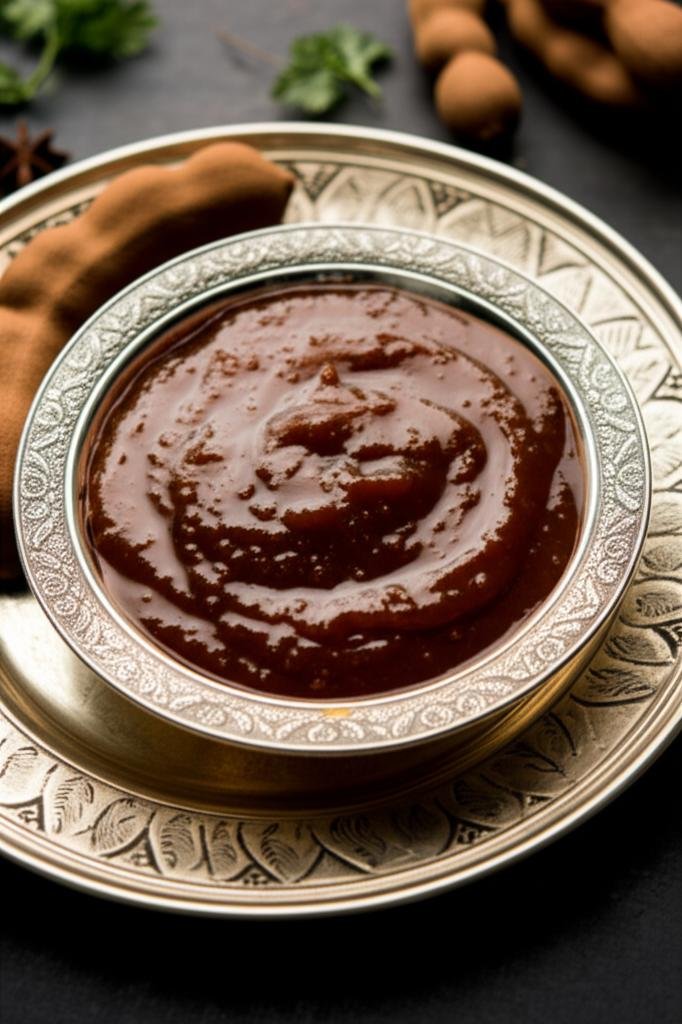
- Simmer the chutney for 15-20 minutes, stirring occasionally, until it thickens to a consistency similar to ketchup or a pourable syrup. It will thicken further upon cooling.
- Taste and adjust salt or sweetness if needed. Remove from heat and let it cool completely before transferring to an airtight container.
Nutrition
Per serving| Nutrient | Amount |
|---|---|
| Calories | 70 kcal |
| Protein | 0.5 g |
| Fat | 0.1 g |
| Carbohydrates | 18 g |
| Fiber | 1 g |
Storage & Freezer Guide
Make it last Refrigerator 3-4 weeks
Store in a clean, airtight glass jar in the refrigerator. Ensure the jar is sterilized for best shelf life.
Freezer Up to 3 months
For longer storage, transfer cooled chutney into freezer-safe containers or ice cube trays. Thaw in the refrigerator overnight before use.
Reheat Stovetop/Microwave
If frozen, thaw first. Reheat gently on the stovetop over low heat, adding a splash of water if it’s too thick, or microwave in 30-second intervals until warmed through.
Chef’s Corner
- For a smoother chutney, you can blend the soaked tamarind and water mixture before straining.
- Adjust the spices to your preference. For a spicier kick, add more red chili powder or a pinch of cayenne.
- If your tamarind pulp contains seeds or hard fibers, ensure you soak it longer and strain thoroughly to avoid a gritty texture.
- A good chutney should have a balance of sweet, sour, and a hint of spice. Taste and adjust as it simmers.