Meal Prep · North Indian
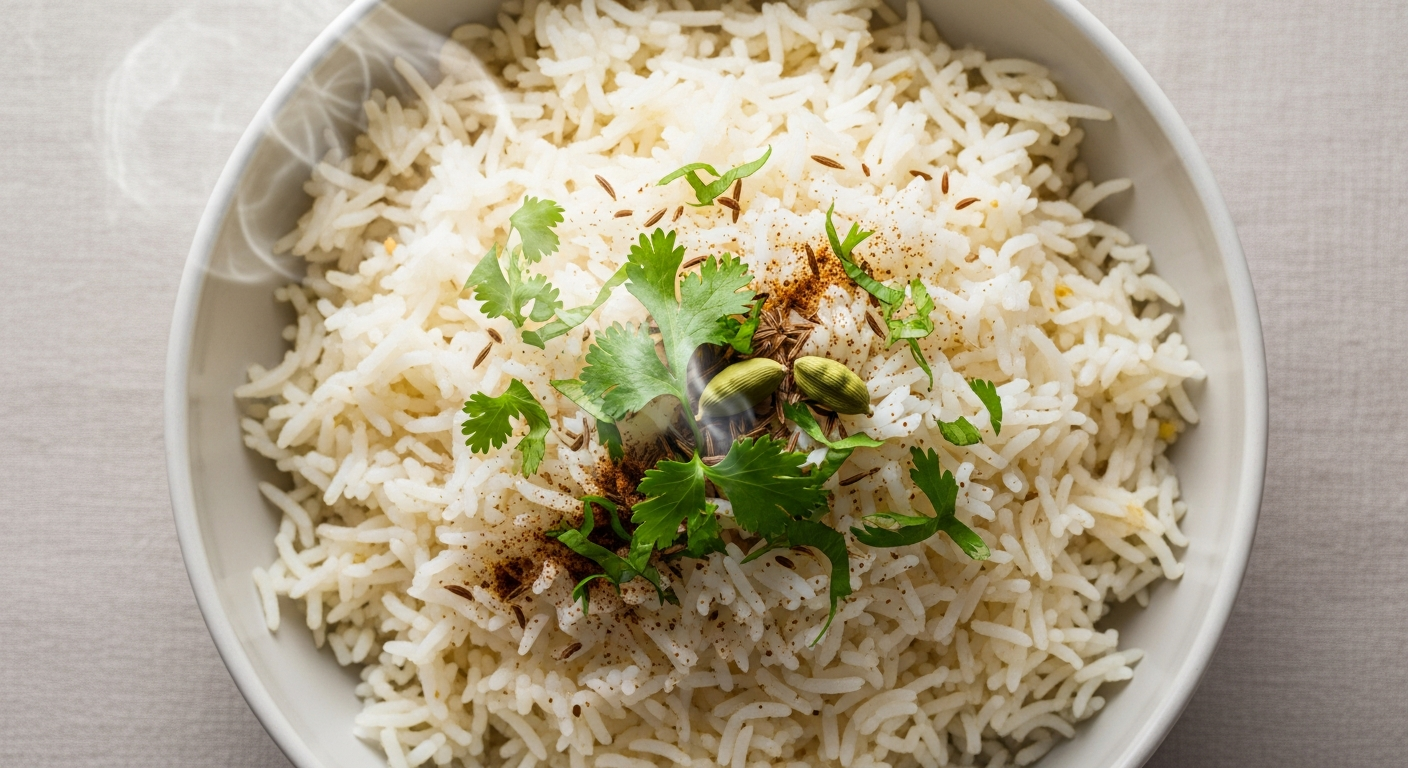
Safed Chawal
The simple, fluffy, and essential staple that completes every North Indian meal.
Ingredients
Tap to check offMethod
Step-by-step- Rinse the Basmati rice thoroughly under cold running water 2-3 times until the water runs clear. This removes excess starch.
- Soak the rinsed rice in fresh water for 15-20 minutes. Drain well before cooking.
- In a heavy-bottomed pot or saucepan, bring 2 cups of water to a rolling boil. Add the drained rice, salt (if using), and ghee/oil (if using).
- Stir once gently to combine. Reduce the heat to the lowest setting, cover the pot tightly, and let it simmer for 12-15 minutes, or until all the water is absorbed and the rice is tender.
- Once cooked, remove the pot from heat and let it rest, covered, for another 5-10 minutes. This allows the steam to finish cooking the rice evenly.
- Gently fluff the rice with a fork before serving to separate the grains.
Nutrition
Per serving| Nutrient | Amount |
|---|---|
| Calories | 180 kcal |
| Carbohydrates | 40 g |
| Protein | 3 g |
| Fat | 0.5 g |
Storage & Freezer Guide
Make it last Refrigerator 3-4 days
Store leftover Safed Chawal in an airtight container in the refrigerator to maintain freshness and prevent drying out.
Freezer Up to 3 months
Once cooled completely, transfer portions of rice to freezer-safe bags or containers. Thaw in the refrigerator overnight before reheating.
Reheat Stovetop/Microwave
To reheat, sprinkle a tablespoon of water over the rice, cover, and microwave until hot, or gently warm in a covered pan on the stovetop over low heat.
Chef’s Corner
- **Rinsing is Key**: Always rinse your Basmati rice thoroughly to remove excess starch, which helps achieve separate, fluffy grains.
- **Soak for Best Texture**: Soaking Basmati rice for 15-20 minutes before cooking helps the grains cook evenly and prevents them from breaking, resulting in longer, more distinct grains.
- **Don’t Over-Stir**: Once the rice is simmering, avoid stirring it too much. This can break the delicate grains and release more starch, leading to sticky rice.
- **Perfect Water Ratio**: A general rule for Basmati is 1 cup rice to 1.5-2 cups water, depending on the age and type of rice. Adjust slightly for your preferred texture.