Meal Prep · South Indian
Appam
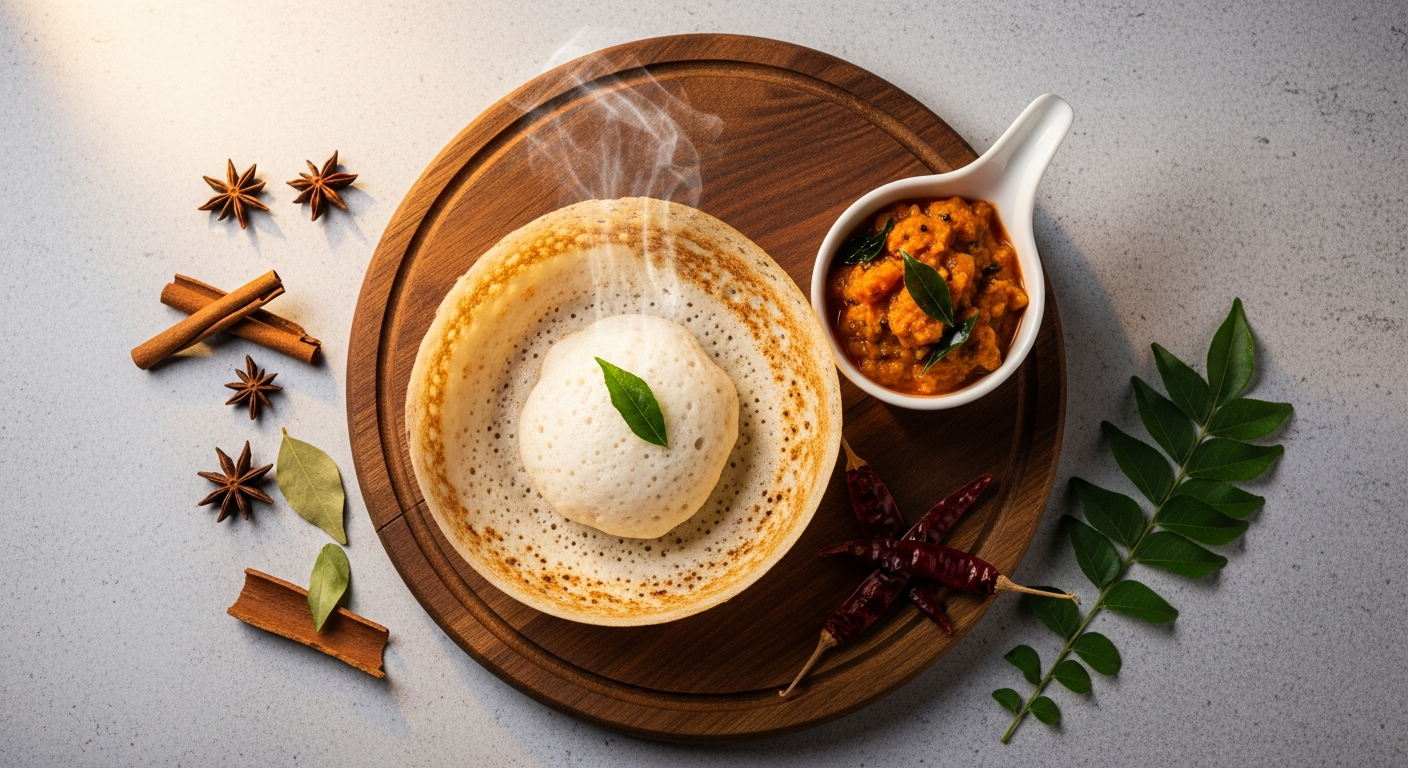
Light, lacy, and subtly sweet, these fermented rice pancakes are a staple South Indian delight, perfect with curries or stews.
Ingredients
Tap to check offMethod
Step-by-step- Rinse the raw rice thoroughly and soak it in water for at least 4-6 hours, or preferably overnight.
- Drain the soaked rice and combine it with the cooked rice, grated coconut, sugar, and salt in a blender or wet grinder.
- Add about 1 cup of coconut milk and blend until you achieve a very smooth, fine batter. Add more coconut milk or water gradually if needed to get a dosa-like consistency.
- In a small bowl, dissolve the active dry yeast in 2 tablespoons of warm water (around 100-110°F or 38-43°C) with a pinch of sugar. Let it sit for 5-10 minutes until it becomes frothy, indicating it’s active.
- Add the activated yeast mixture to the rice batter and mix well. Cover the batter with a lid and let it ferment in a warm place for 8-12 hours, or until it has risen and become bubbly. The fermentation time will vary depending on ambient temperature.
- Once fermented, the batter should be light and airy. Gently stir the batter. If it’s too thick, add a little more coconut milk or water to achieve a pouring consistency, similar to thin pancake batter.
- Heat an appam pan (appachatti) or a small non-stick pan with deep sides over medium heat. Lightly grease it with a few drops of oil.
- Pour a ladleful of batter into the center of the hot pan. Immediately lift the pan and gently swirl it in a circular motion to spread the batter thinly around the edges, leaving a thicker, softer center.
- Cover the pan with a lid and cook for 2-3 minutes, or until the edges turn crispy golden brown and the center is soft, spongy, and cooked through. You shouldn’t need to flip an appam.
- Carefully remove the appam from the pan and serve hot with your favorite curry, stew, or chutney. Repeat with the remaining batter.
Nutrition
Per serving| Nutrient | Amount |
|---|---|
| Calories | 280 kcal |
| Carbohydrates | 45 g |
| Protein | 5 g |
| Fat | 10 g |
| Fiber | 3 g |
| Sodium | 250 mg |
Storage & Freezer Guide
Make it last Refrigerator 2-3 days
Store leftover appam batter in an airtight container in the fridge. Appams are best eaten fresh, but cooked appams can be stored in an airtight container for a day.
Freezer Not recommended
Freezing cooked appams is not ideal as they lose their delicate texture upon thawing. It’s best to cook them fresh.
Reheat Stovetop/Microwave
To reheat cooked appams, gently warm them on a dry non-stick pan for a minute or two until soft, or microwave for 15-30 seconds until warm. Be careful not to overcook.
Chef’s Corner
- **Perfect Fermentation:** For optimal fermentation, ensure your yeast is active and your batter is in a warm spot (e.g., inside a slightly warm oven that’s turned off, or near a sunny window).
- **Batter Consistency:** The key to perfect appam is the batter consistency. It should be thinner than dosa batter but thicker than crepe batter, allowing it to swirl beautifully.
- **Fresh Coconut:** Using fresh grated coconut makes a significant difference in flavor and texture compared to desiccated coconut. If using frozen, thaw it completely.
- **Sweet Spot:** Adjust the sugar slightly to your preference. Some prefer a subtly sweeter appam, while others like it more neutral.
- **Appam Pan:** An appachatti (appam pan) is highly recommended for achieving the traditional shape and texture with crispy edges and a soft center.