Kelvaragu Koozh
A cooling and nutritious South Indian traditional porridge made from finger millet, perfect for a healthy meal.
Ingredients
Tap to check offMethod
Step-by-step- In a thick-bottomed pan, mix 1/4 cup of ragi flour with 1 cup of water to form a smooth, lump-free paste.
- Bring the remaining 3 cups of water to a boil in the same pan. Once boiling, reduce heat to low and slowly add the ragi paste, stirring continuously to prevent lumps.
- Cook on low heat for about 15-20 minutes, stirring occasionally, until the mixture thickens and the raw smell of ragi disappears; it should have a glossy appearance.
- Remove from heat and let the cooked ragi porridge (kali) cool completely to room temperature.
- Once cooled, transfer the kali to a large bowl. Add the buttermilk and salt, mixing well until thoroughly combined and smooth.
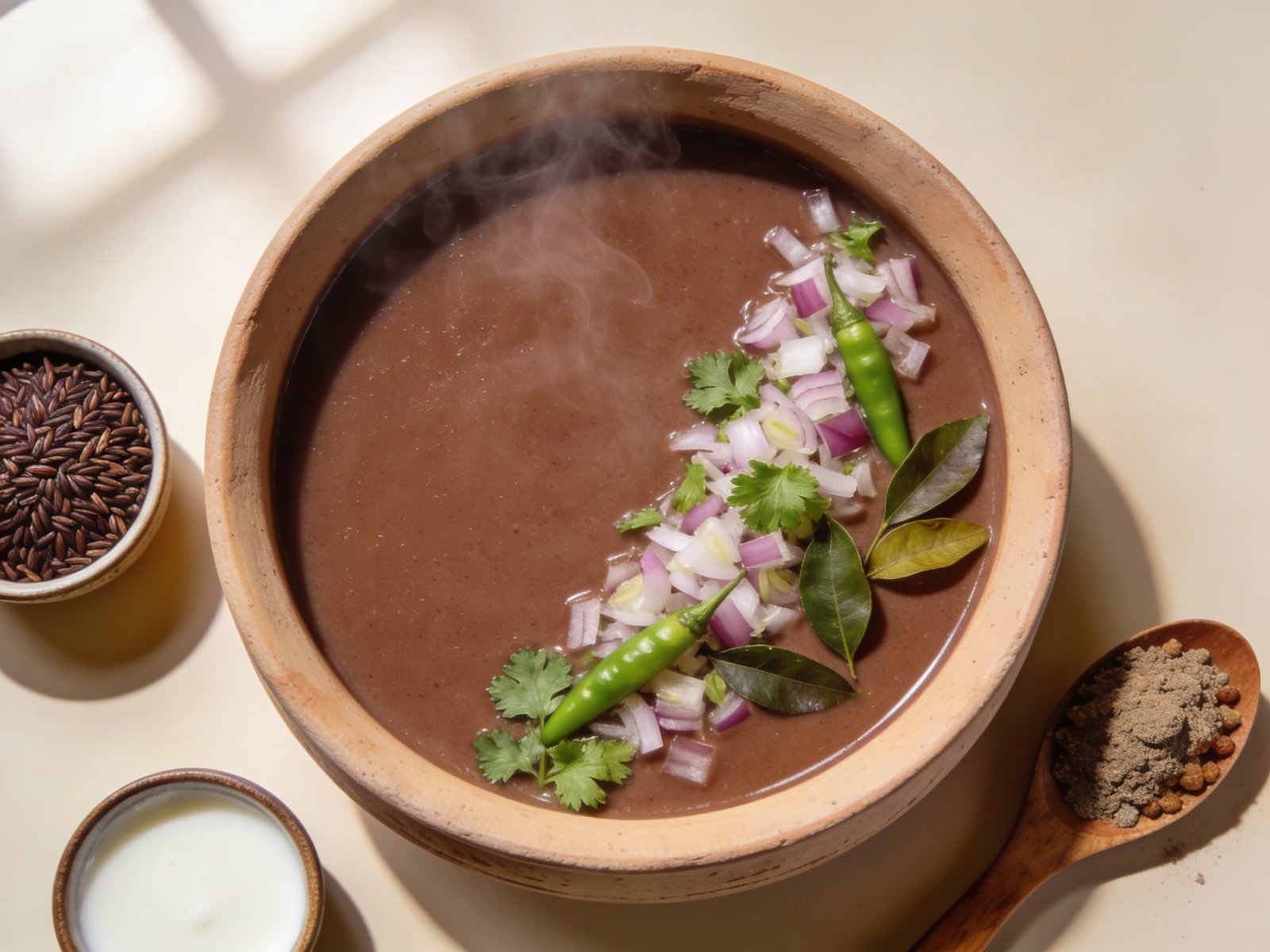
- Stir in the finely chopped red onion, green chili (if using), curry leaves, and grated ginger (if using).
- Serve chilled, garnished with fresh coriander leaves, if desired.
Nutrition
Per serving| Nutrient | Amount |
|---|---|
| Calories | 130-150 kcal |
| Protein | 6 g |
| Carbohydrates | 26 g |
| Fat | 2 g |
| Fiber | 4 g |
Storage & Freezer Guide
Make it lastStore leftover Kelvaragu Koozh in an airtight container in the refrigerator for up to 3-4 days. Stir well before serving.
Freezing the finished koozh with buttermilk is not recommended as it can affect the texture and cause separation. However, you can freeze the plain cooked ragi paste (kali) in an airtight container for up to 1 month. Thaw overnight in the fridge, then proceed with adding buttermilk and other seasonings.
Kelvaragu Koozh is traditionally served chilled or at room temperature. Reheating is not typically done as it can alter the consistency and flavor. If serving from the fridge, simply remove it and let it sit for 15-20 minutes to come to room temperature, then stir vigorously.
Chef’s Corner
- For best results, allow the cooked ragi porridge to cool completely before adding buttermilk to prevent curdling.
- Adjust the consistency by adding more buttermilk or water to your preference. Some prefer it thick, others more liquid.
- Experiment with toppings like finely chopped cucumber, grated carrots, or a tempering of mustard seeds and curry leaves for added flavor.
- Using sour buttermilk enhances the traditional taste of koozh.